

 Italiano
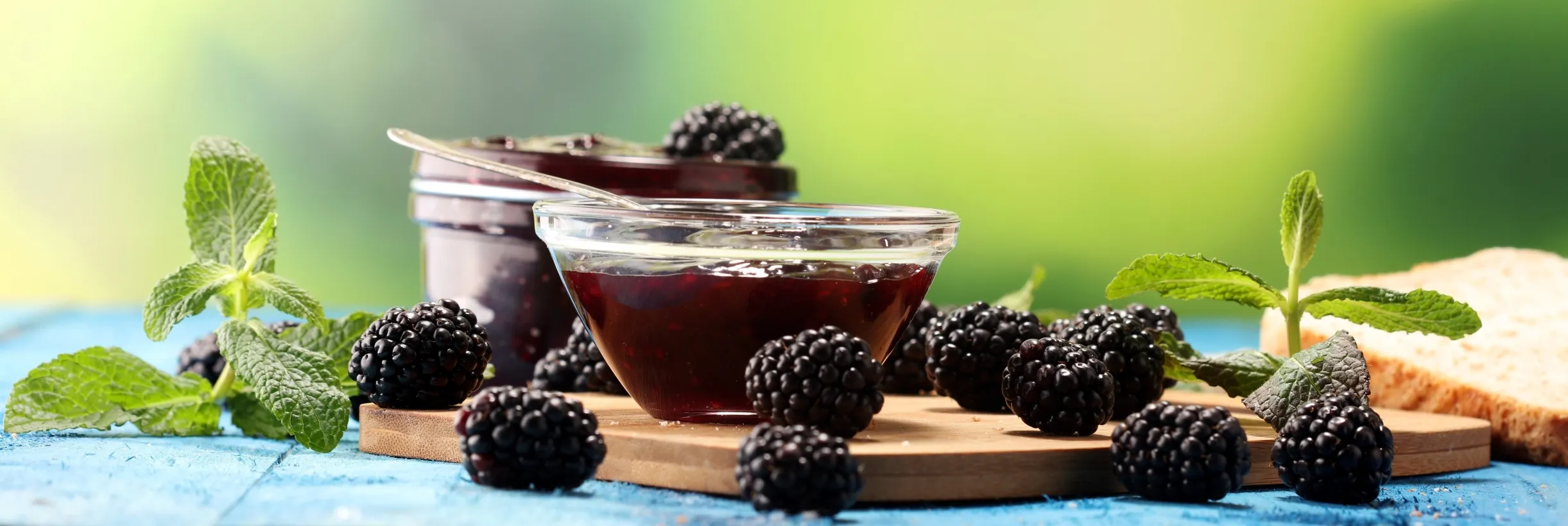
Chiaverini Brothers jams since 1928
It is not infrequent for us that an object, a scent and a taste evoke past time in the blink of an eye, fleeting moments whose memory still dwells within us. Just as the famous Madeleine, in Marcel Proust’s literary masterpiece “In Search of Lost Time,” conjures up distant memories for the narrator, so in the blink of an eye the most mundane of objects can plunge us into memory to the point of intense scents of our childhood.
In everyday life, there is nothing more effective than jam to make us feel like children again, a split second in which an extremely happy period of life, for most of us, stands before us and envelops us. A roundup of frames in which we are always ready to sink our “voracious” spoon into the glass jar filled with succulent delight, with our mothers on the other hand always ready to intervene to avert yet another indigestion.
Jam, a great invention that came about because of the need to preserve fruit picked in season so we could enjoy it during times when it was hard to find, has since become a commonly used product for children in particular. Let’s face it, often and often, at least for the generation of baby boomers, resorting to jam was the way our moms came up with to get us to eat some fruit. It wasn’t the same thing, we know that perfectly well, and especially in those years, but with what joy we were always ready to be “caught with our hands in the jam.”
In the 1960s and 1970s, the use of fruit jams became more and more consistent, thanks in part to the impressive development of large-scale retail trade, but the more commercial products found on supermarket shelves were not exactly synonymous with food quality. Often there was only a shadow of fruit, and with sugars and preservatives the goal of stimulating the palate was achieved but at the same time the health of consumers was being undermined. Great strides have been made since then and the culture of good food, which prioritizes the quality of the product and its healthy aspects, has taken over from the culture of profit for its own sake.
But some companies in the sector, since their origin, have made quality their hallmark by offering their customers and their “little ones” jams and preserves that wisely combined taste and genuineness. In our land of Tuscany, “F.lli Chiaverini” represent a shining example of an enterprise that has succeeded in this endeavor, and it is no coincidence that their jams are increasingly known and appreciated in Italy and the rest of the world.
Their exciting history is well remembered on their official website.
“It was the year 1928, the young Chiaverinibrothers decided to establish a small business for the production of jams and preserves, just outside the city walls of Florence.
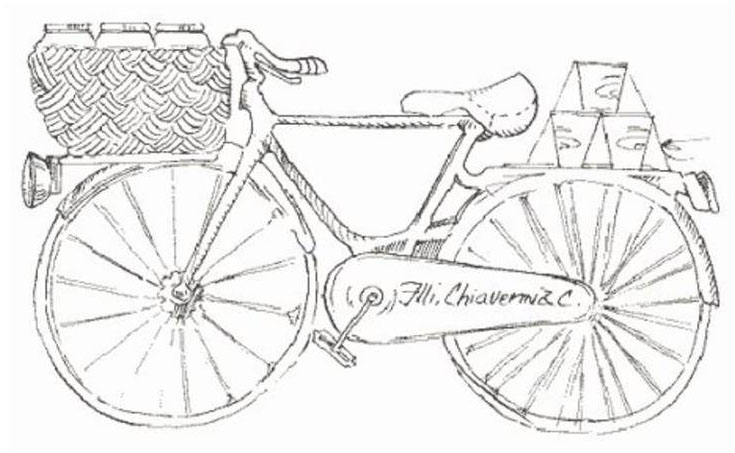
The fruit was sorted and purchased from local farmers, brought to the kitchens of the fledgling family business and processed into jams. The containers were small wooden tubs that were arranged in wicker baskets and transported by bicycle to the stores in town, which in turn sold the product by weight, in wax paper.
1930 saw the birth of the famous cardboard and aluminum container, which also managed to cross national borders, thanks to the expansion of the Florentine trade with exponents of the British Embassy. After a few years, Chiaverini brothers’ jams are not only in demand by grocery stores: 5-kg tins are introduced to meet the demands of pastry shops as well. Success increases production; the pots that were born for cooking fruit and sugar soon make way for kettles designed by the founders themselves to be able to double production.
And deliveries also evolved: while Federico Fellini was making the film “La Dolce Vita,” the Chiaverini brothers introduced the Lambretta. The workshop on Via Locatelli maintains its manual and artisanal tradition but, slowly, is transformed into a factory. In the 1970s, the in-house research and quality control department is opened to follow and monitor production at all stages.
At the end of the millennium, the colored jar, with a tear-off opening and aroma-saving lid, the same in shape and design but made of food-grade polypropylene, which would replace the old aluminized cardboard container of the 1930s.
Then attention to market trends and orientations led the Chiaverini brothers to start the production of jams and marmalades with organically grown fruit. A lot has been done in these 90 years since the wooden tubs, but the quality is still that of the origins and the recipes are still the family ones, handed down from generation to generation, for a flavor that has become history.”
Turning finally to the use of jams, the first things that come to mind are tarts and cheese pairings. Let us leave aside for a moment the chapter on pairings as a topic of extreme complexity that we reserve the right to address on another occasion.
Recipes for tarts using fruit jam are numerous, and we offer some that you can make using the wonderful products of “F.lii Chiaverini.” You will simply click on the names and download them.
I Muffins with jam. You can use any kind of jam but one of the most suitable ones, even according to tradition, is the one with wild blueberries.
Cheesecake with jam. It looks very much like cheesecake but with the difference that shortcrust pastry is used as the base exactly as for a tart. The jams to be used are those made with red and black fruits, such as berries, wild blackberries, strawberries, raspberries, sour cherries e cherries.
Tart with oatmeal. Oatmeal is used within the dough modifying its taste and texture. Suitable for any jam that will obviously affect the taste, such as rennet apples o smith, orange with peels and many others.
Fruit cake frosting. It is used for fruit-based cakes and covers the surface to prevent browning. The most suitable flavors are those apricot and peach.
In addition, you could have fun enriching your jams with powders and spices, such as Chili Banana Pepper, which is one of the most suitable, with lemon or lime zest or a grating of fresh ginger or their juice.
Finally, a necessary clarification. The products of “F.lli Chiaverini” we have all commonly called them jams but actually we should have referred to them as jams in the vast majority of cases. In fact, jams have considerably more fruit than marmalades and even more so extra jams.
Jam is made from sugar and citrus fruits, such as orange, tangerine, lemon, citron, bergamot, grapefruit) in which the percentage of fruit is at least 20%. Jam, on the other hand, is made with all other types of fruit with the percentage not less than 35% and increases to 45% in the case of extra jam.
 Artisans
 Catalogue
 Special offers
 About us
 Contacts
 Blog