

 Italiano
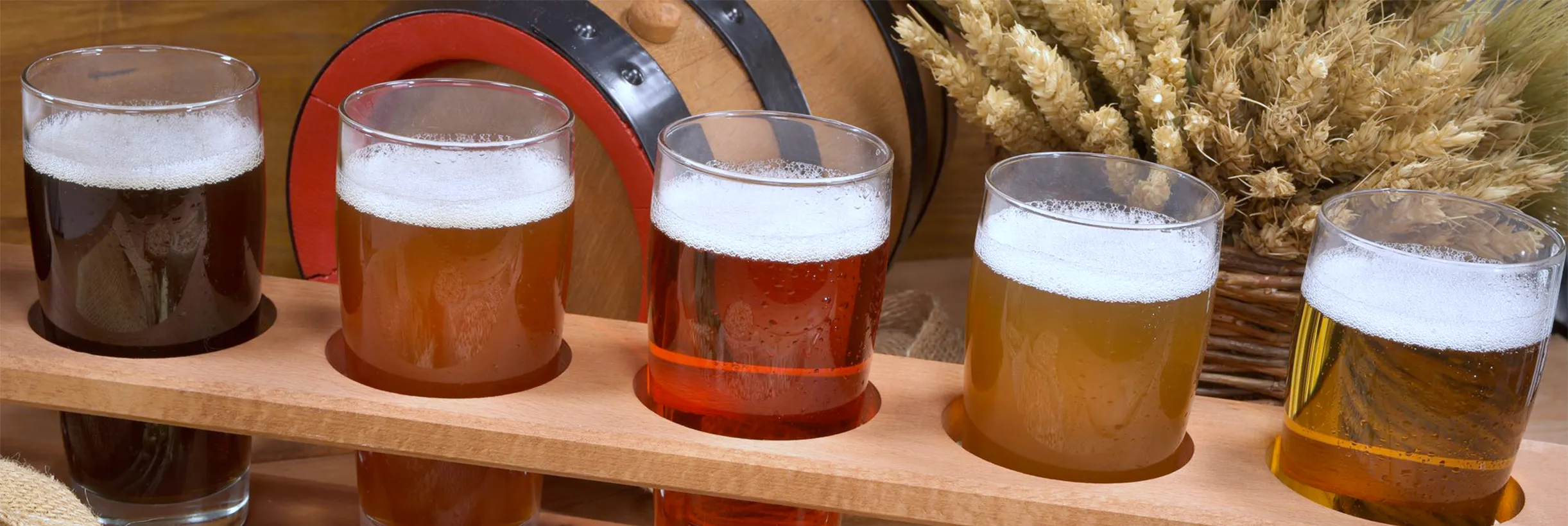
La Stecciaia Tuscan Craft Beer
Today we want to talk about beer, about our irresistible Tuscan craft beer produced by “La Stecciaia” brewery, an excellent testimony to the absolute quality of our offerings. But before we get to Rapolano Terme, the beautiful Sienese village where the company is located, some trivia about the fantastic history of beer, from its origin to the present day.
The history of beer is as old as the history of civilization. From the historical sources in our possession it can be said that all the great peoples of the past knew beer from the Egyptians to the Babylonians, from the Greeks to the Romans. Beer, whose birth is probably due to chance, may have originated because of a constant that distinguished all peoples of antiquity and was a source of primary sustenance: the cultivation of cereals. A spontaneous fermentation of them, once placed in favorable conditions, may have led to man’s discovery of the first rudimentary form of beer, a distant relative of the current beverage that daily accompanies our days.
On the origin of the word beer there is still no certainty among those in the industry, but it is believed that the term may derive from the Old German bior or beor, itself a child of the Latin word biber, meaning drink. Having come from the Middle East to Greece, where it seems that even Plato had to say “it must have been a wise man who invented beer,” on the Italic peninsula its production was developed by the Etruscans who spread it to neighboring peoples, primarily the sons of Romulus. The latter, as is amply documented, were not enthusiastic about the discovery of beer, which was considered a barbaric drink, suitable for the Germanic peoples, and thus continued to prefer the wine of the god Bacchus. It was precisely the Germanic and Celtic peoples, due to the spread of consumption and the development of production techniques, who became the main producers and promoters in Europe, a characteristic certainly maintained to the present day.
Turning to our more recent history, after a few foreign companies had raged for decades, making their mark on the domestic beer market, with proposals that were too commercial and often equally questionable, starting in the mid-1990s of last century some small and enlightened producers began to offer quality proposals and from that moment, favored by legislation that starting in 1995 had made it legal to brew beer at home for noncommercial purposes, new experiences began to flourish and future brewers 100% “made in Italy” began to form.
From Mesopotamian peoples to Rapolano Terme, the step is long, but the protagonist of this wonderful story is basically always the same: beer. Here, in Rapolano Terme, La Stecciaia Brewery was born, “…in the suggestive territory of the Crete Senesi, an area known for its barren landscapes, moved by gently undulating hills, with a predominantly agricultural vocation, where the cultivation of cereals has deep historical roots.” This is the first artisanal agricultural brewery with organic certification in Tuscany and was born within Riva Isabella’s Podere del Pereto farm, which has been growing cereals organically since 1995.
In these territories, where ears of corn will soon give way to “splints,” genuine, fresh, full-bodied beers are born, tasting which rediscover the flavors of ancient grains. The distinguishing feature of this brewery, a concrete example of absolute quality research, is the painstaking care devoted to every single moment of the production process, from the cultivation of valuable and ancient varieties of cereals to the selection of hops, from the “crush” to the aging in cold storage. At “La Stecciaia” all beers are born in respect and exaltation of raw materials, in a perpetual search for harmony and balance between the aromas and flavors of the various components.
At one time, the land where the farm is now developed was owned by one of the Santa Maria della Scala grances of Siena; this was a complex whose land holdings were divided into vast farms and fortified granaries called grance, such as that of Serre di Rapolano, of which Podere del Pereto was a part. Within these ancient structures, as the name suggests, the most important buildings were undoubtedly the granaries “large rooms that housed stai, strainers, nets for sifting grain, ropes, ziri and crates inside them.”

“La Stecciaia” brewery produces several varieties of beer, suitable for different types of palates and all of absolute quality.
We start with the “Cocò“, an organic, top-fermented beer inspired by the Blanche style, “reinterpreted” with the addition of monococcal spelt and bergamot peels that make it particularly refreshing. Moderately alcoholic, bottle-fermented, unpasteurized, unfiltered, light straw color with a characteristic slightly cloudy appearance. Aroma of delicate sweetness from the malts along with slight spicy notes of coriander and a light citrus scent. The sweet taste of the malts is well balanced by the citrusy ones of bergamot and spicy ones of coriander. Slightly bitter. Slightly tart finish. Medium-light body.The result is an elegant, fresh and thirst-quenching beer. We suggest enjoying it as a refreshing aperitif or paired with cured meats, white meats, fish, fresh cheeses.
And now the “Farzotta“, a top-fermented organic beer, with the addition of spelt, bottle-fermented, unpasteurized, unfiltered, deep golden color. On the nose hints of white fruit (pear, banana) and floral. Delicate and balanced in the mouth, with malty notes and sweetness brought by spelt. Fine carbonation. Moderately hoppy finish. Suitable for appetizers or delicate first courses, white meats, fresh cheeses or as an aperitif.
We turn to the “Senatrice“, a highly fermented organic beer, with the addition of the historic Senatore Cappelli durum wheat variety, bottle-fermented, unpasteurized, unfiltered. The recipe is inspired by the Belgian “Saison” style, historically brewed on farms. Golden color, with abundant foam. Hints of clove, citrus and peppery notes emerge on the nose. In the mouth, spicy and citric notes due to the grain, moving on to herbaceous notes from the hops. Lively carbonation. Dry and refreshing finish. Food pairings we recommend are fish appetizers (shellfish or crustaceans), vegetables, aged or medium-aged cheeses such as pecorino.
Here we are at “Mandarina B.“, an organic, top-fermented beer with added oats, inspired by the Golden Ale style, bottle-fermented, unpasteurized, unfiltered. After primary fermentation, a cold hopping process is carried out using the Mandarina Bavaria variety. Golden color, abundant and creamy foam. On the nose, the aroma is citrusy, with slight herbaceous notes. On the palate, there are initially light malty notes to move to a refreshing finish with a fairly persistent bitterness. Ideal for grain soups, shellfish, cured meats, (sweet ham, bacon, etc…) and smoked scamorza cheese.
Finally, the “Kolonia Gluten Free“, a Kolsch-style organic beer, hybrid (top-fermented yeast at low temperature) bottle-fermented, unpasteurized, unfiltered. Certified Gluten Free Light golden color, moderately cloudy,compact white foam.On the nose the aroma of sweet cereal and subtle fruity aroma. On the palate soft and round taste. Mild malt taste with subtle and delicious fruity notes. Medium-low bitterness. Particularly clean and dry finish. Light body. Excellent as a refreshing aperitif or paired with cured meats, fish, white meats, salads or very fresh cheeses, pizza.
The beers of “La Stecciaia” are small masterpieces resulting from the mastery of skilled artisans of pleasure. All strictly organic, they are waiting to refresh your evenings while enriching your table with quality.
Long live Tuscany and long live its beer!
 Artisans
 Catalogue
 Special offers
 About us
 Contacts
 Blog